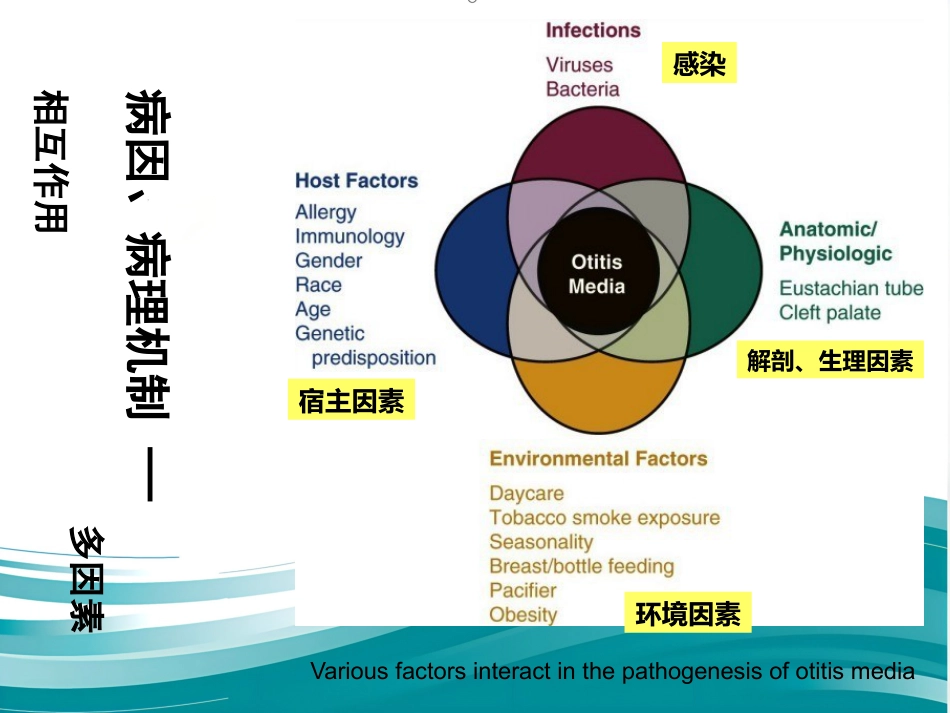
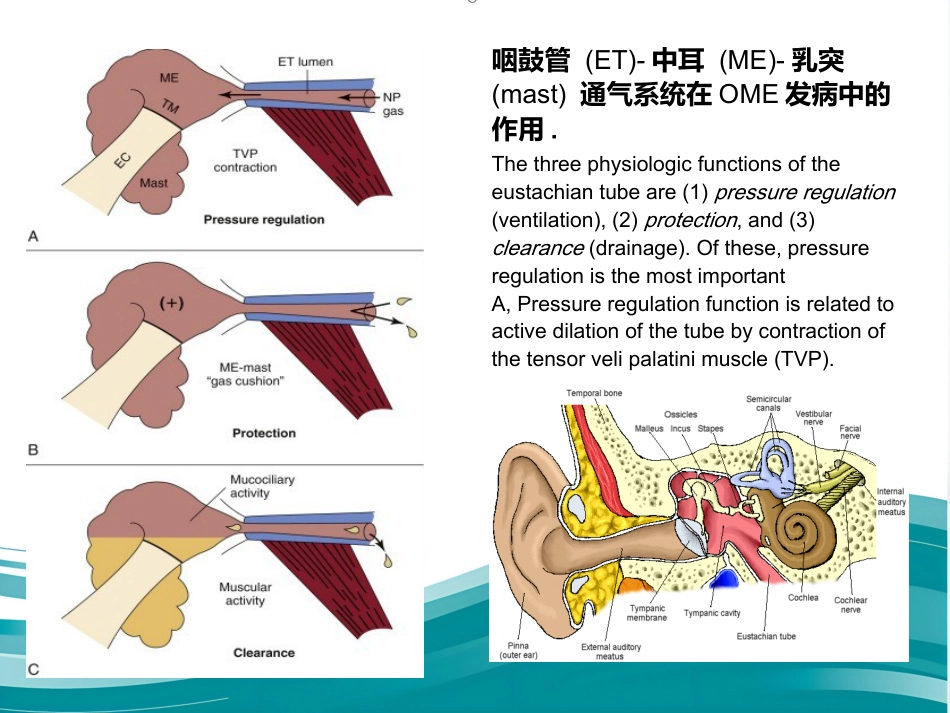
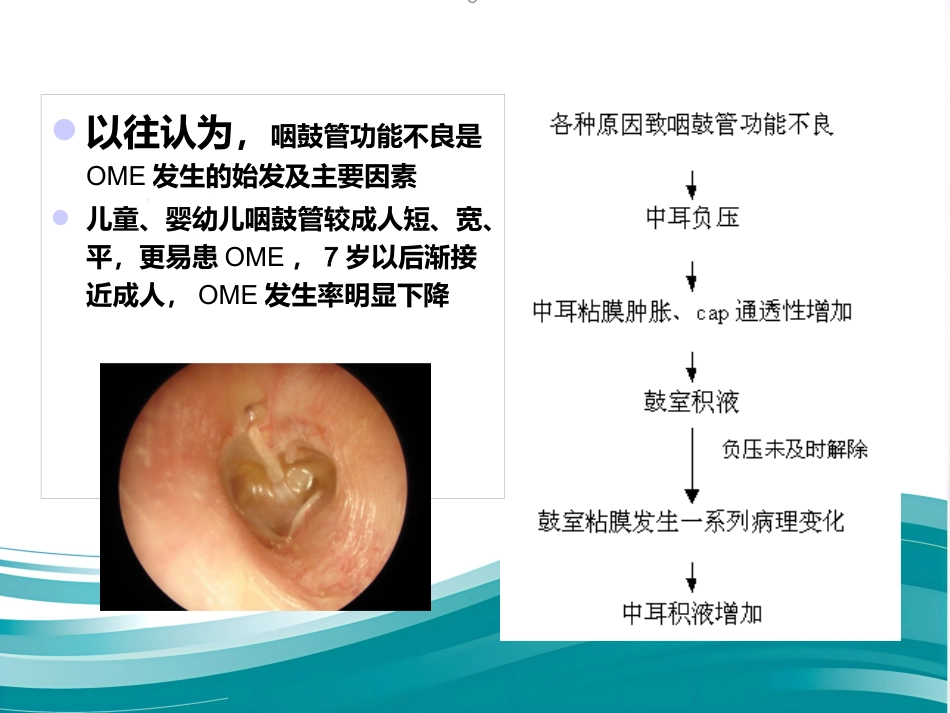
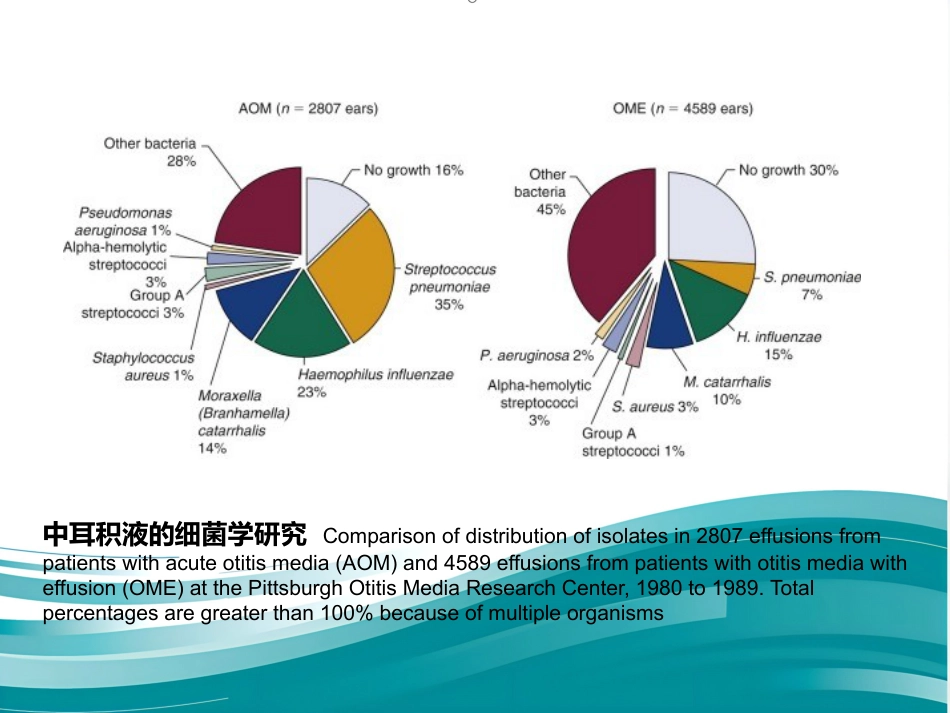
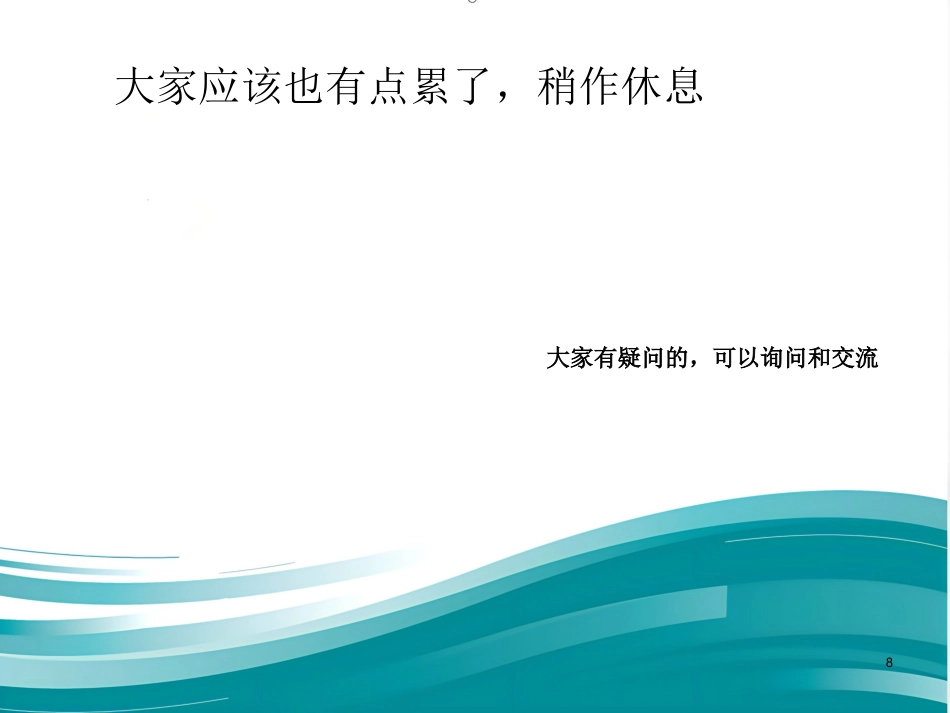
儿童分泌性中耳炎诊治分泌性中耳炎(OME )是以鼓室积液和传导性听力下降为主要特征的中耳非化脓性炎症 Catarrhal inflammation of middle ear cleft that characterized by middle ear effusion and conductive hearing loss.无急性炎症表现(耳痛、发热、鼓膜充血肿胀)的中耳积液,但可源于急性中耳炎 OME is defined as MEE without signs and symptoms of acute inflammation (otalgia, irritability, and fever; bulging of the tympanic membrane)概 述儿童、婴幼儿听力下降的主要原因之一 One of the most important factor that affecting the Children’s hearing儿童OME 确切的发病率不详,因本病通常无明显临床症状。然而,几乎所有3 岁左右的儿童都曾经历过至少1 次中耳积液的发作 It may be difficult to determine the “true” incidence of OME because, by definition, OME is asymptomatic. However, nearly all children had experienced at least one episode by the age of 3 years Various factors interact in the pathogenesis of otitis media 病因、病理机制 — 多因素相互作用感染解剖、生理因素宿主因素环境因素咽鼓管 (ET)- 中耳 (ME)- 乳突 (mast) 通气系统在OME 发病中的作用. The three physiologic functions of the eustachian tube are (1) pressure regulation (ventilation), (2) protection, and (3) clearance (drainage). Of these, pressure regulation is the most importantA, Pressure regulation function is related to active dilation of the tube by contraction of the tensor veli palatini muscle (TVP). 以往认为,咽鼓管功能不良是OME 发生的始发及主要因素儿童、婴幼儿咽鼓管较成人短、宽、平,更易患OME ,7 岁以后渐接近成人,OME 发生率明显下降中耳积液的细菌学研究 Comparison of distribution of isolates in 2807 effusions from patients with acute otitis media (AOM) and 4589 effusions from patients with otitis media with effusion (OME) at the Pittsburgh Otitis Media Research Center, 1980 to 1989. Total percentages are greater than 1...